New Light on the Ancient Past
-
Shop
Own beautiful limited edition prints by Anthony Murphy or adorn your home with hand forged artworks from Tom King. Give the gift of letting someone else choose with a gift card.
-
Discover
Keep informed on the latest news and developments on prehistorical and Mythical Ireland with Anthony's famous blog. See the sites in person on our popular Mythical Ireland walking tours.
-
Learn
Immerse yourself in some of the best researched and most interesting insights and stories available in the areas of Irish myths and legends, prehistoric monuments, and stone age astronomy.
Display the Legacy that Shaped You
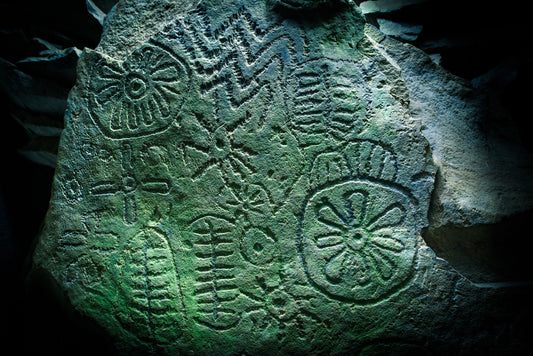
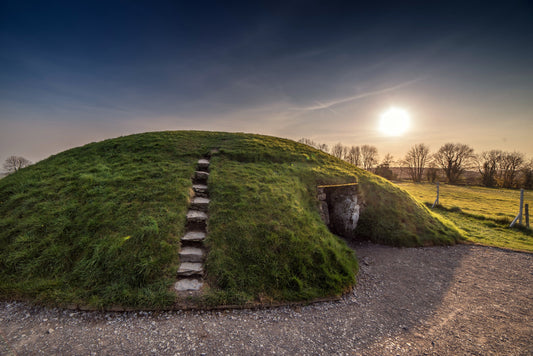
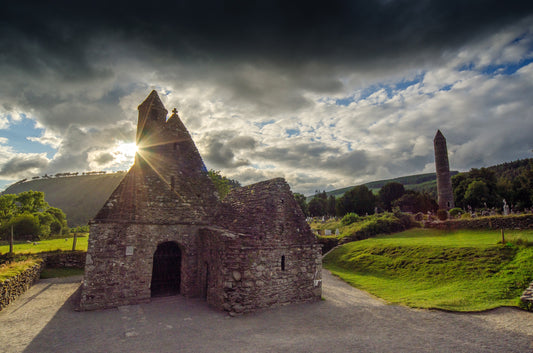
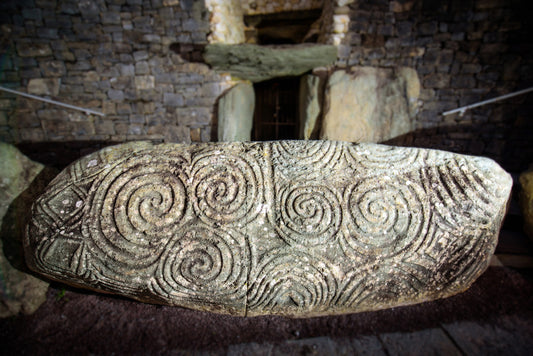
Do you feel a connection to Mythical Ireland, a whisper from the ancient inhabitants of this land of monuments and legends? Bring the ancient past to your walls with our stunning exclusive collection of museum quality prints featuring iconic monuments like Newgrange, The Hill of Tara, and Glendalough. These captivating photos are more than just décor, they are a tangible link to our shared ancestors and their stories. Display them proudly in your home or office.
-
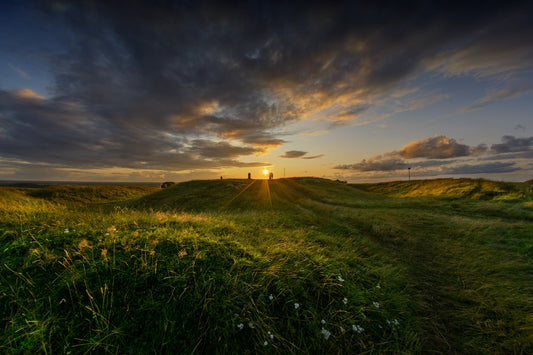
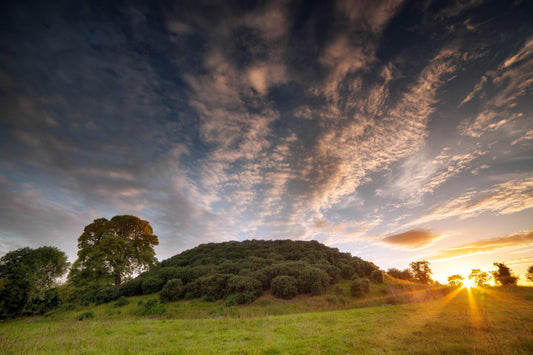
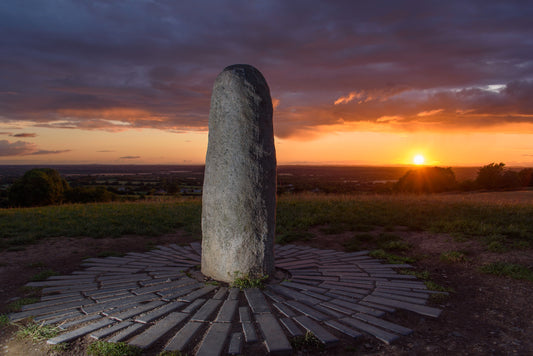
An Irish Sunset on the Ancient Royal Hill of Tara
Regular price From €49.00 EURRegular priceUnit price per -
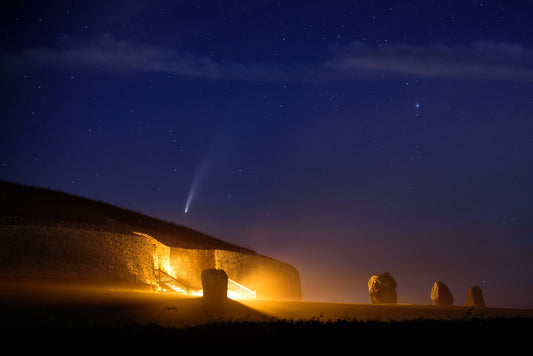
NEOWISE Passes over Mythical Newgrange
Regular price From €49.00 EURRegular priceUnit price per -
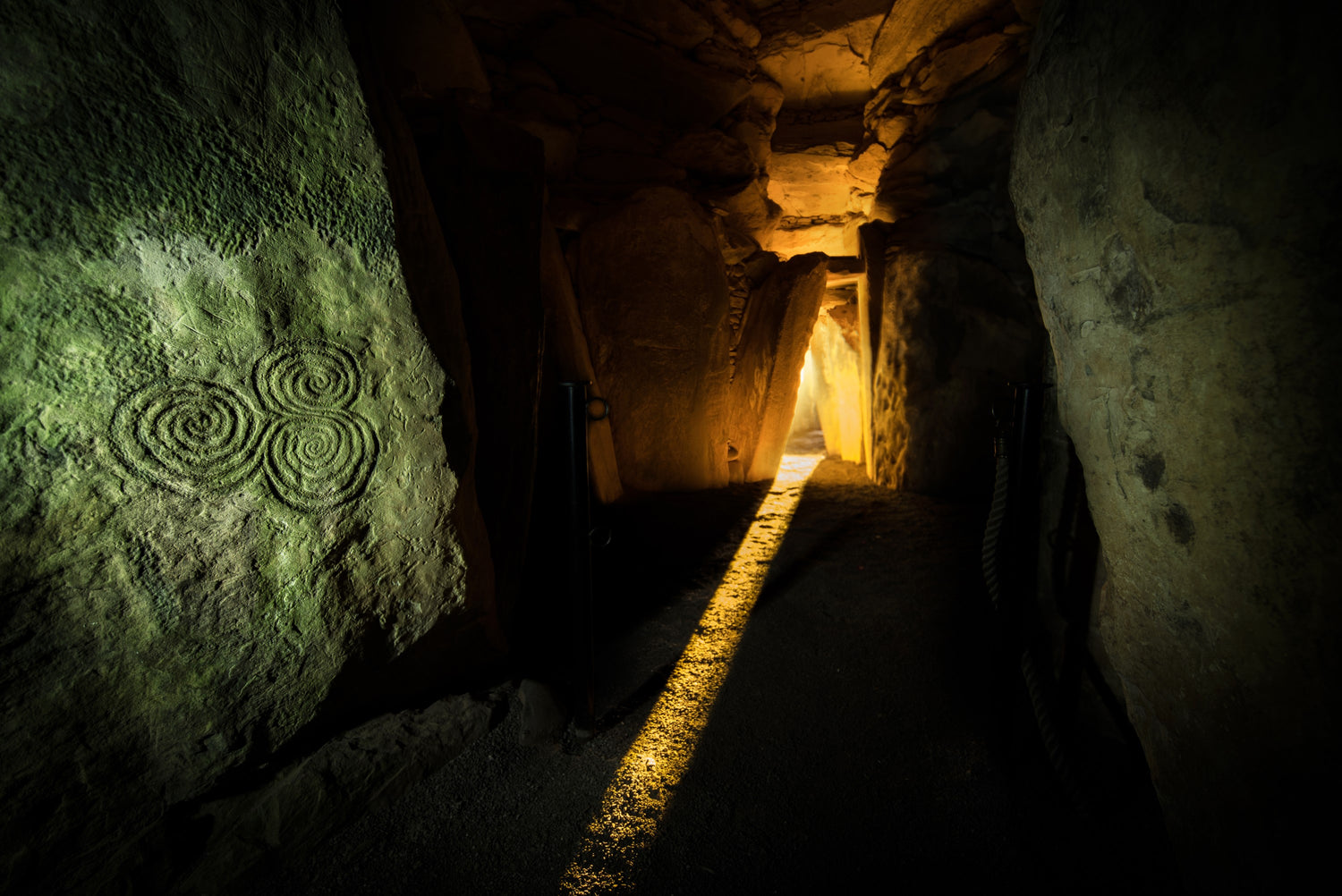
The Equinox Stone
Regular price From €49.00 EURRegular priceUnit price per -
Spring Sunset at Fourknocks
Regular price From €49.00 EURRegular priceUnit price per -
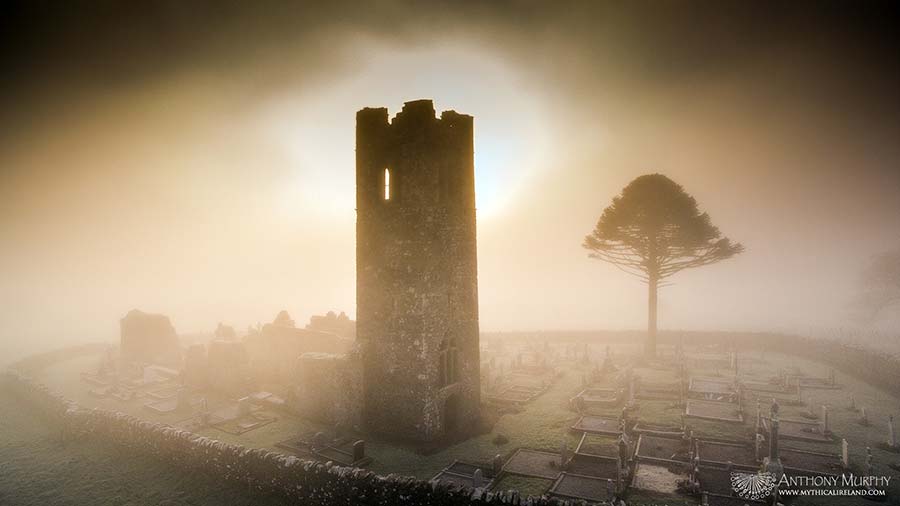
Sunset in Glendalough
Regular price From €49.00 EURRegular priceUnit price per -
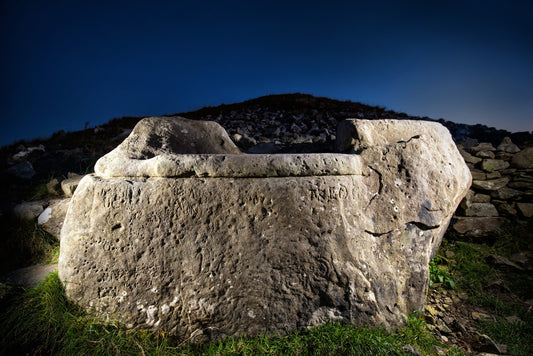
The Most Famous Stone in Ireland
Regular price From €49.00 EURRegular priceUnit price per -
The Sun Setting on Summer Solstice at Dowth
Regular price From €49.00 EURRegular priceUnit price per -
The Hag's Chair
Regular price From €49.00 EURRegular priceUnit price per -
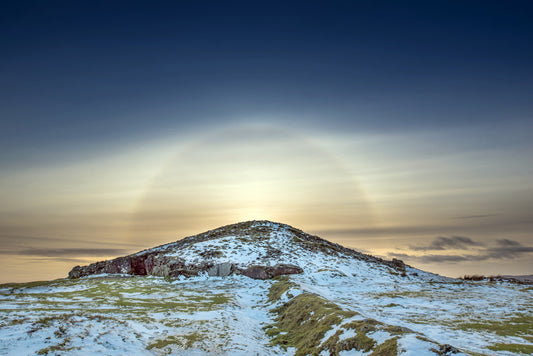
A Halo of Light over Cairn T Passage Tomb
Regular price From €49.00 EURRegular priceUnit price per -
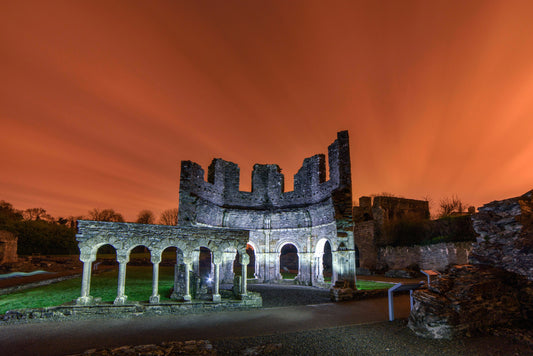
The Lavabo at Mellifont Abbey
Regular price From €49.00 EURRegular priceUnit price per -
The Sun Sets behind the Stone of Destiny
Regular price From €49.00 EURRegular priceUnit price per -
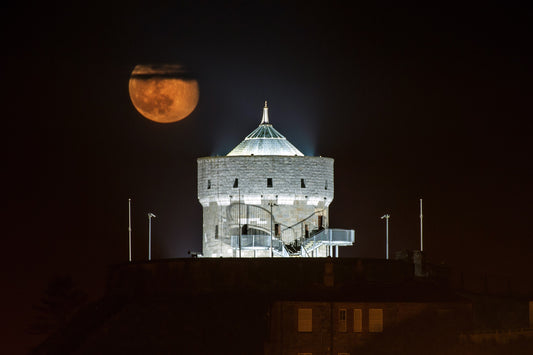
Moonrise at Millmount in Drogheda
Regular price From €49.00 EURRegular priceUnit price per
About Mythical Ireland
Mythical Ireland was established in March of the year 2000 by author, journalist, astronomer and photographer Anthony Murphy. The website represents a journey into the ancient past, casting new light on the early history of Ireland. This exploration takes place through many different disciplines, including archaeology, anthropology, astronomy, mythology, spirituality and genetics.
The great 5,000-year-old megalithic passage-tombs of Brú na Bóinne in the Boyne Valley represent the zenith of a phase of Irish prehistory that began with the introduction of farming around 6,000 years ago. Newgrange, Knowth and Dowth are huge, enigmatic structures, that are the finest examples of a type of monument that is found scattered throughout Ireland. None can compare to these three, though, in terms of size, grandeur, and their illustrious prominence in the ancient myths.
Anthony’s exploration encompasses many different facets of these great monuments. He invites you to step into this ancient world, and through the various media of words, photography and video/film, to enjoy a unique glimpse of a past that seems very much alive.
Ancient Ireland
-
Ancient Sites
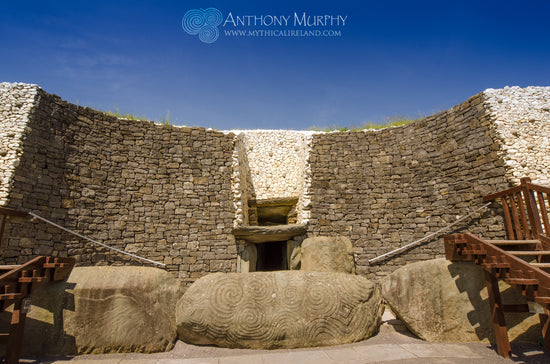
Read Ancient SitesEnter the ‘Ancient Sites’ section of this blog for a fascinating and wide-ranging exploration of the megalithic and sacred sites of Ireland. Find out all about the Stone Age and prehistoric ruins and learn more about the possible functions and alignments of these sites. Visit the great temples of Brú na Bóinne, the Hill of Tara, the ancient cairns of Loughcrew among many others.
-
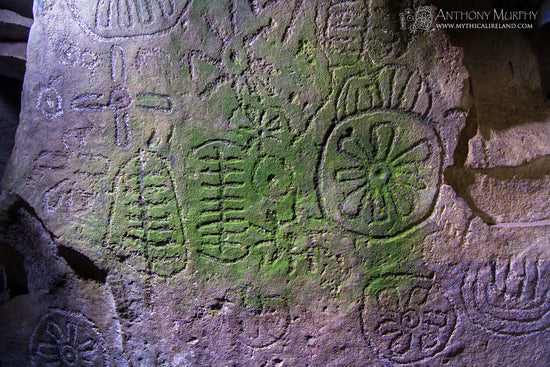
Myths & Legends
Read Myths & LegendsExplore the ancient myths, legends and folklore of Ireland and their meaning. Read the epic Táin Bó Cuailnge, or the place-name myths in the Dindshenchas. Learn about how the Tuatha Dé Danann and the Milesians came to Ireland and how the early texts describe various invasions of prehistoric Éire. Hear about Fionn and the Fianna, and discover how some myths might contain information about astronomy and the stars.
-
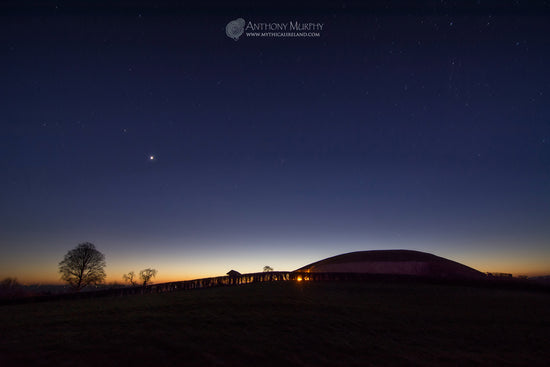
Astronomy & the Sky
Read Astronomy & the SkyThere is no doubt that the ancient megalith builders had a substantial knowledge of the movements of the sun, moon, planets and stars through the heavens. Learn more about just how complex and impressive this knowledge was. There is evidence that the people of the Neolithic knew about the 19-year Metonic cycle of the moon, as well as being able to predict eclipses.



Mythical Ireland Blog
View all-
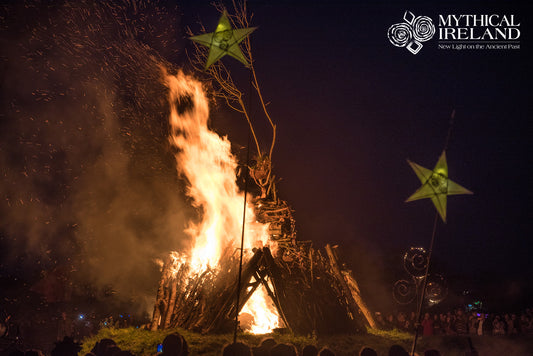
The lighting of the sacred Bealtaine fire at Ui...
Anthony Murphy shares some images from the lighting of the great sacred Bealtaine fire at the fire festival on the ancient Hill of Uisneach, County Westmeath.
The lighting of the sacred Bealtaine fire at Ui...
Anthony Murphy shares some images from the lighting of the great sacred Bealtaine fire at the fire festival on the ancient Hill of Uisneach, County Westmeath.
-
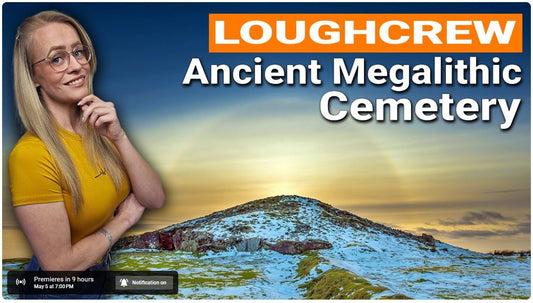
A new film about ancient Loughcrew
A new short film about the Loughcrew cairns in County Meath, made by Mythical Ireland in conjunction with filmmaker Grant Wakefield and musician Andrew Heath, will be premiered on the...
A new film about ancient Loughcrew
A new short film about the Loughcrew cairns in County Meath, made by Mythical Ireland in conjunction with filmmaker Grant Wakefield and musician Andrew Heath, will be premiered on the...
-
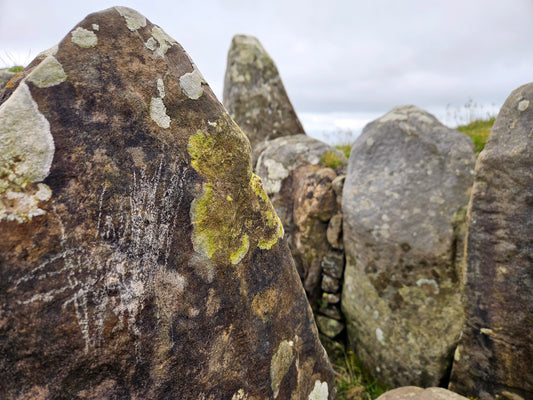
When will it ever end? Vandals strike again at ...
Another incident of vandalism at a prehistoric Irish monument, this time at Cairn S at Slieve na Calliagh, Loughcrew, County Meath, is just the latest in a concerning trend in...
When will it ever end? Vandals strike again at ...
Another incident of vandalism at a prehistoric Irish monument, this time at Cairn S at Slieve na Calliagh, Loughcrew, County Meath, is just the latest in a concerning trend in...




Don't Take Our Word For It!
We ask every customer for an honest review on Google. We tell them we want to hear the good and the bad. It's an email you will receive after you make your purchase as well. Guess what? So far we have nothing but amazing 5 star reviews from all of our customers.